
The Future of Cybersecurity Is Behavioural: Understanding Human and AI Risk
Why enterprises must move beyond traditional security awareness to continuous Human Risk Intelligence and AI-driven security.
Many modern attacks look legitimate, and AI systems now act on business data on people’s behalf. Why security teams need to understand behaviour, not just alerts, and how human risk and AI risk fit together.
In brief
- Many attacks now use legitimate accounts and everyday requests, so the deciding factor is often how a person responds
- Training completion and click rates alone do not describe human risk
- AI assistants and agents can act on business data, so organisations need visibility into AI-driven actions as well as human decisions
- The aim is to know where risk exists, why, whether it is changing, and what will reduce it
On this page
Cybersecurity threats are evolving faster than traditional security controls can adapt.
A phishing email no longer needs a suspicious attachment. A fraudulent request may come from a legitimate account. A convincing voice call can be generated using AI. And increasingly, autonomous AI systems can interact with sensitive business information without direct human intervention.
The challenge facing enterprises is no longer limited to identifying malicious activity. It is understanding who is creating risk, how that risk develops, and what needs to change to reduce it.
This is why behavioural intelligence is becoming an essential component of modern cybersecurity.
The security challenge has shifted from threats to behaviour
Traditional security tools focus primarily on detecting known malicious indicators, suspicious files, compromised infrastructure and policy violations. But many modern attacks exploit legitimate access and everyday human behaviour.
A familiar situation
A finance employee receives an urgent payment request that appears to come from a senior executive.
The email looks legitimate, the request fits the employee’s responsibilities, and there is no malicious attachment.
The deciding factor may not be the email gateway. It may be how the employee interprets and responds to the request.
This creates a fundamental challenge for security teams: how do you identify risk when the activity itself appears legitimate?
The answer requires greater visibility into behavioural patterns, employee decision-making and the circumstances surrounding security events.
Human risk cannot be measured through training completion alone
For years, enterprise security awareness programmes have relied on a familiar set of metrics:
- Employees completing mandatory training.
- Participation in phishing simulations.
- Click rates during simulated attacks.
- Compliance with annual awareness requirements.
These measurements remain useful, but they do not provide a complete understanding of human risk. An employee may complete every training module yet repeatedly engage with suspicious emails. Another may fail an initial simulation but subsequently demonstrate consistently safer behaviour. Treating both employees as equally prepared overlooks the very information security teams need.
Activity metrics alone
Who completed the module, who took part in the simulation, and what the click rate was this quarter.
Understanding risk
Behavioural trends, repeated vulnerabilities, reporting habits, responses to different attack techniques and improvement over time.
The objective is not simply to identify employees who make mistakes. It is to understand why vulnerabilities exist and use that intelligence to improve security readiness. For a practical look at this shift, see why cybersecurity training fails to change behaviour.
Behavioural intelligence brings context to human risk
Every employee interacts differently with technology, information and business processes. A finance employee may regularly receive payment requests. An HR professional may handle sensitive employee information. A system administrator may access privileged infrastructure. A single security baseline cannot accurately represent all these activities.
Security teams need contextual insights that account for employee roles, exposure to different threats, historical behaviour and the nature of individual security events. This is where Human Risk Intelligence becomes valuable.
By combining measurable signals from phishing simulations, reporting behaviour, awareness activities and security assessments, organisations can develop a more meaningful understanding of exposure across their workforce. Rather than treating every simulation failure as an isolated incident, security teams can identify recurring patterns and prioritise targeted interventions.
The result
A security programme focused on measurable behavioural improvement instead of simply recording participation.
AI is creating a new dimension of enterprise risk
Artificial intelligence is transforming how employees interact with information and business applications. AI-powered assistants can summarise confidential documents, generate communications, analyse datasets and automate complex workflows. Autonomous AI agents are also beginning to perform activities that previously required direct human involvement.
These developments raise important security questions:
- 1What information can an employee share with an AI application?
- 2Can sensitive business data leave an approved environment through AI prompts or outputs?
- 3How can an organisation assess actions performed by AI agents on behalf of employees?
- 4What happens when an AI system performs an authorised action in an unexpected or unsafe manner?
Traditional identity and access controls provide part of the answer, but authorisation alone does not establish whether an action is appropriate. Organisations will increasingly need visibility into both human decisions and AI-driven actions.
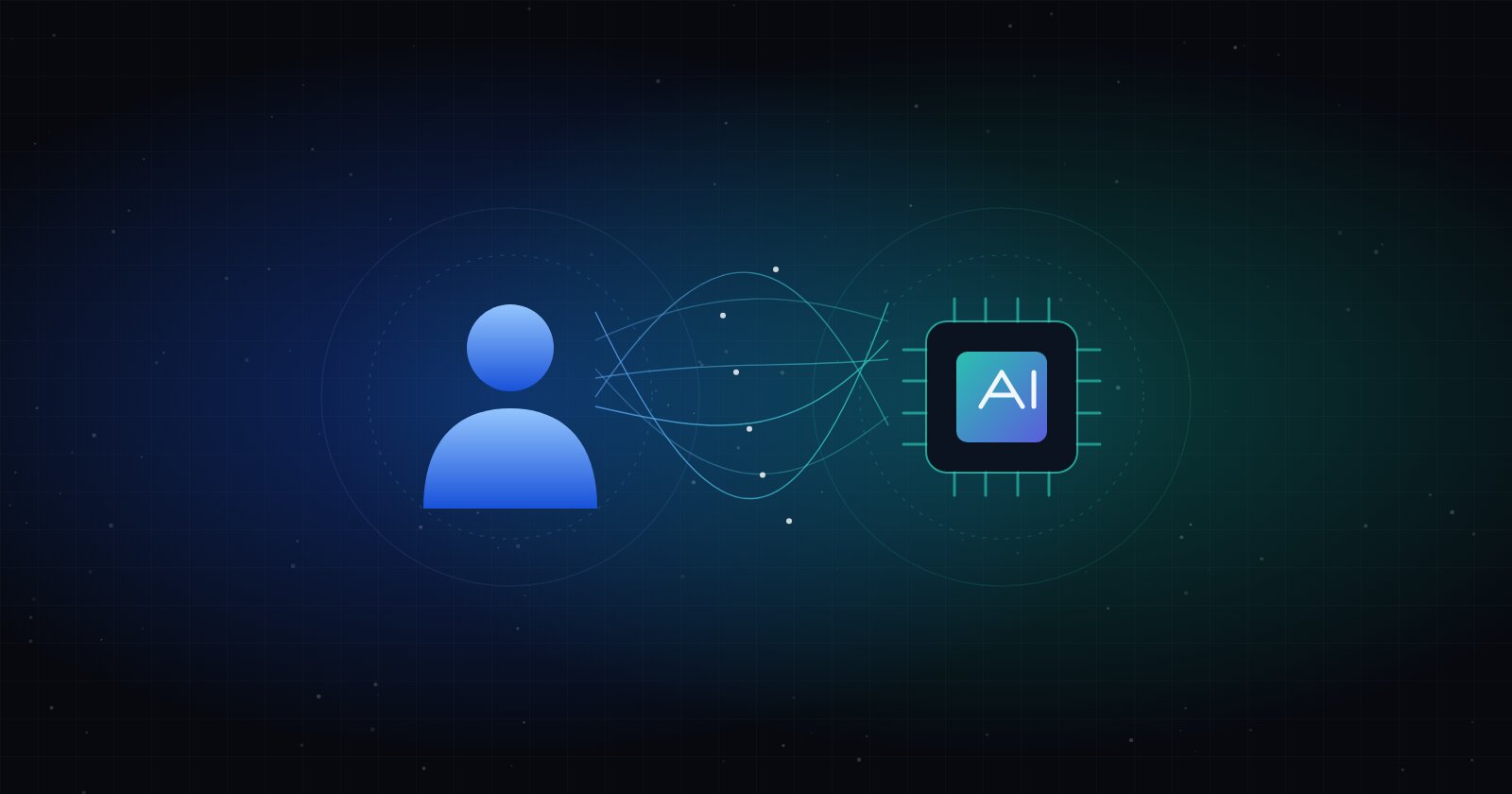
This creates an emerging requirement for Human and AI Risk Management: understanding the interaction between people, AI systems, enterprise data and security policies.
Moving from security awareness to continuous risk management
At PhishSheriff, we believe the future of cybersecurity requires a deeper understanding of human behaviour. Security awareness should not function as an isolated annual activity. It should contribute to a continuous cycle of assessment, intelligence and improvement.
- Assess
- Understand
- Intervene
- Measure
- repeat
PhishSheriff’s Human Risk Management capabilities bring together:
Together, these capabilities support a shift from measuring awareness activity to understanding and reducing human risk.
The next evolution: connecting human risk with AI risk
As enterprises increase their adoption of AI, cybersecurity strategies must evolve alongside them. PhishSheriff’s longer-term vision is to extend its Human Risk Management foundation into a broader Human and AI Risk Intelligence platform.
Planned direction, not current capability
Deeper User Behaviour Analytics, integrations with DLP and SIEM environments, visibility into sensitive data exposure, and AI usage governance. These describe where PhishSheriff is heading; they are not features available today.
The objective is to help organisations investigate how human actions, AI interactions, identity activity and enterprise data exposure contribute to overall risk. For security leaders, this would enable a more connected view of security across people, technology and AI-driven workflows.
The opportunity is not merely to detect more events. It is to connect relevant intelligence, establish context and support informed responses before exposure develops into a serious incident.
The future belongs to organisations that understand risk, not just alerts
Modern cybersecurity is no longer only about preventing unauthorised access. It is also about understanding how authorised users behave, how attackers manipulate trusted interactions, and how AI systems introduce new forms of exposure.
Organisations need to move beyond asking whether employees have completed security training or whether a security control has generated an alert. They need to ask more meaningful questions:
Where does risk exist? Why does it exist? Is it increasing or decreasing? And what action will make the greatest difference?
The future of enterprise security will be shaped by organisations that can answer these questions with evidence. At PhishSheriff, our mission is to make human risk measurable, understandable and actionable today, while building towards a future where human and AI risk can be understood together.
Understand your human risk before it becomes a security incident
See how PhishSheriff helps organisations evaluate employee security behaviour, improve awareness and strengthen email trust through a connected Human Risk Management platform.
Related reading
All guides →
Put this into practice
See how PhishSheriff runs simulations, assigns training and reports on human risk and email-domain trust.